









APAC CIOOutlook
About UsConferencePartner With Us
  • Technologies
    • Blockchain
      Data Intelligence and Management
      Digital Transformation
      FinTech
      Generative and Agentic AI
      Low Code No Code
      Mobile Application
      Networking
      Robotics
      Storage
      Wireless
  • Industries
    • Automotive
      Aviation
      Banking
      Construction
      E-Commerce
      Food and Beverages
      Healthcare
      Insurance
      Logistics
      Manufacturing
      Retail
      Supply Chain
      Travel and Hospitality
  • Platforms
    • Microsoft
      Salesforce
      SAP
  • Strategic Solutions
    • Business Intelligence
      Contact Center
      Corporate Finance
      CRM
      Cyber Security
      Data Center
      Enterprise Asset Management
      Enterprise Performance Management
      IT Infrastructure and Services
      Managed Services
      Procurement
      Unified Communication
      Workflow
  • Home
  • CXO Insights
  • Leadership Perspectives
  • Innovation Insights
  • Research
  • News
  • Whitepapers
  • CXO Awards
#

Apac CIOOutlook Weekly Brief

×

Be first to read the latest tech news, Industry Leader's Insights, and CIO interviews of medium and large enterprises exclusively from Apac CIOOutlook

Subscribe

loading

THANK YOU FOR SUBSCRIBING

  • Home
  • Generative and Agentic AI
Editor's Pick (1 - 4 of 8)
left
The Right Technology And Reliable Partners; The Business Next Frontier

Luke O'Brien, CIO, ISS Facility Services Australia & New Zealand

Conquering Technological Transformation

David Kennedy, Group CIO, Transaction Services Group

How to Get to AI-first

Ani Paul, CIO, ING Australia

Legal Knowledge Management and the Rise of Artificial Intelligence

Christopher Zegers, CIO, Lowenstein Sandler LLP

Building an AI-Based Machine Learning for Global Economics

Alexander Fleiss, CIO & CEO, Rebellion Research Partners LP

Leading with AI: From Ethics to Enterprise Impact

Adrienne Heinrich, AI COE Head, Senior Vice President, Union Bank of the Philippines

Responsible Data Leadership in an AI-Driven World

Gemma Dias, Head of Data Governance, Tyro Payments

Building Agile, Secure and Human-Centered IT at Globe

Raul Macatangay, Chief Information Officer, Globe Telecom

right

The City of the Future Is Connected, Resilient, and Sustainable

Chew Men Leong, President/Head, Urban Solutions, ST Engineering
Tweet
content-image

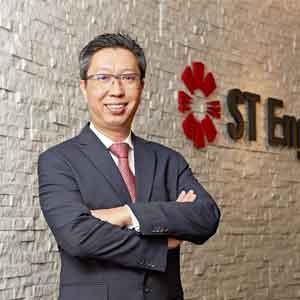
Chew Men Leong, President/Head, Urban Solutions, ST Engineering

Smart city technologies are creating more connected, resilient and sustainable societies, says Chew Men Leong, President, Urban Solutions at ST Engineering

The march towards urbanisation is inexorable. COVID-19 may have dampened its pace temporarily, but cities continue to offer the most efficient means of organising societies, and serving up the best economic opportunities.

Yet, alongside the benefits of high density living are some very tangible externalities - congestion, transportation systems under duress, lurking security threats, proliferation of diseases and intense competition for utilities, to name a few. To address these issues, become smarter and greener, as well as enhance the overall quality of life for communities, cities around the world are rapidly adopting smart city technologies: solutions that enable societies toward a more connected, resilient and sustainable future.

Being Connected

The modern world is experiencing an explosion in bandwidth, reduced latency, and network coverage at lower cost per connection node. In the last decade, the cost of Internet of Things (IoT) sensors has fallen more than three-fold, leading to more wireless sensors being retrofitted onto buildings, critical and transportation infrastructure at a rapid clip.

These sensors detect and show what’s going on in real-time. Akin to MRI scans revealing parts of the anatomy inside the body, useful insights are derived to enable predictive maintenance and reduce unplanned downtime, leading to improved public transportation efficiency and reliability, and reduced road congestion. Automation via robotics at workplaces and facilities such as hospitals also become viable. Complexities are more readily abstracted down to simple phone applications, be it for efficient utilities management, prompts for improvement actions by city councils, or even for scheduling and payments of seamless public transport journeys.

Being Resilient

The proliferation of sensors, artificial intelligence, and data measurement platforms yield new benefits for security, bringing higher levels of situational awareness to cities. Remote surveillance and crowd sourcing, combined with sense making help detect anomalies and enable timely intervention. Even a humble but ubiquitous lamppost can be wired up to serve as a city sentinel, helping to monitor traffic, potential threats and environmental changes. In the current pandemic situation, smart city technologies offer increased and improved options for expeditious contact tracing and enforcement of safe distancing.

Being Sustainable

New combinations of connected technologies are driving greater efficiencies in utilities. Across various cities, utility systems are being retrofitted to move closer to net-zero outcomes. Intelligent power grids enable optimal injection of renewable energy. Smarter water grids reduce network leakage. On-demand lighting, air-conditioning and waste management allow the optimal matching of services and supply to human demand.

In land transportation, the need for car ownership is reducing gradually as more efficient and affordable, seamless end-to-end mass transit options are offered to commuters. Meanwhile, we have also witnessed a transformation with the rollout of shared and autonomous public transportation, facilitated by Mobility-as-a-Service applications, and a shift to electric transportation platforms, which significantly decrease traffic congestion, pollution and the carbon footprint of every passenger.

People are at the Core of Smart Cities

Ultimately, smart city technologies are not the end, but rather a means to the end, to improve quality of life for citizens. Developing smart city solutions that are citizen-centric and resolve issues related to daily living provide tangible value and is critical for successful adoption.

At ST Engineering, we have a single-minded aim to help cities overcome their key urban challenges to improve quality of life for their communities. We focus on the mobility, security and environment domains, providing a portfolio of innovations that extend across smart metro, intelligent traffic management, fleet telematics, IoT and data platforms, cloud-enabled smart buildings and estates, smart security systems, data connectivity, healthcare robotics, autonomous vehicles, and even sustainable urban cooling. We are also growing capabilities in new areas such as digital mobility payments, intelligent energy management and electric vehicles, among others.

ST Engineering has been in the smart city business for many years, and has built a track record of more than 700 smart city projects in over 130 cities across the globe. We are also an active participant in Singapore’s Smart City initiatives. We believe our smart city portfolio and extensive operational experience stand us in good stead to help cities advance along their journeys to become more connected, resilient and sustainable, creating a better future for generations to come.
tag

IoT

Energy Management

Renewable Energy

Security Systems

Predictive Maintenance

Telematics

Weekly Brief

loading
Top 20 Prominent Artificial Intelligence Solutions Providers in APAC - 2024
Featured Issue

I agree We use cookies on this website to enhance your user experience. By clicking any link on this page you are giving your consent for us to set cookies. More info

APAC CIOOutlook
Follow on LinkedIn

About

  • Home
  • About Us
  • Partner With Us

Stay Connected

  • Subscribe
  • Newsletter
  • Sitemap

Contact Us

  • editor@apacciooutlook.com
  • sales@apacciooutlook.com
  • marketing@apacciooutlook.com

Legal

  • Editorial Policy
  • Privacy Policy
  • Terms of Use

© 2026 APAC CIOOutlook. All rights reserved. Headquarteblue in Fort Lauderdale, FL, USA.

This content is copyright protected

However, if you would like to share the information in this article, you may use the link below:

https://generative-and-agentic-ai.apacciooutlook.com/cxoinsights/the-city-of-the-future-is-connected-resilient-and-sustainable-nwid-8197.html